



















For many people experiencing varicose veins, the first question is: “What treatment is best for me?”
Two of the most effective modern options are Endovenous Laser Treatment (EVLT) and VenaSeal. Both are minimally invasive procedures designed to close unhealthy veins and redirect blood flow to healthier ones. Both are performed under ultrasound guidance and allow patients to return to normal activities quickly.
While these treatments share many similarities, the best option depends on your individual vein anatomy, symptoms, and overall health. The only way to determine the most appropriate treatment is through a diagnostic ultrasound and consultation with our vein specialists.
Below is a clear comparison to help you understand how these treatments work and what to expect.
How EVLT and VenaSeal Work
Both EVLT and VenaSeal treat saphenous vein reflux, one of the most common causes of varicose veins. Using ultrasound imaging, the physician identifies the unhealthy vein and guides a small catheter into position.
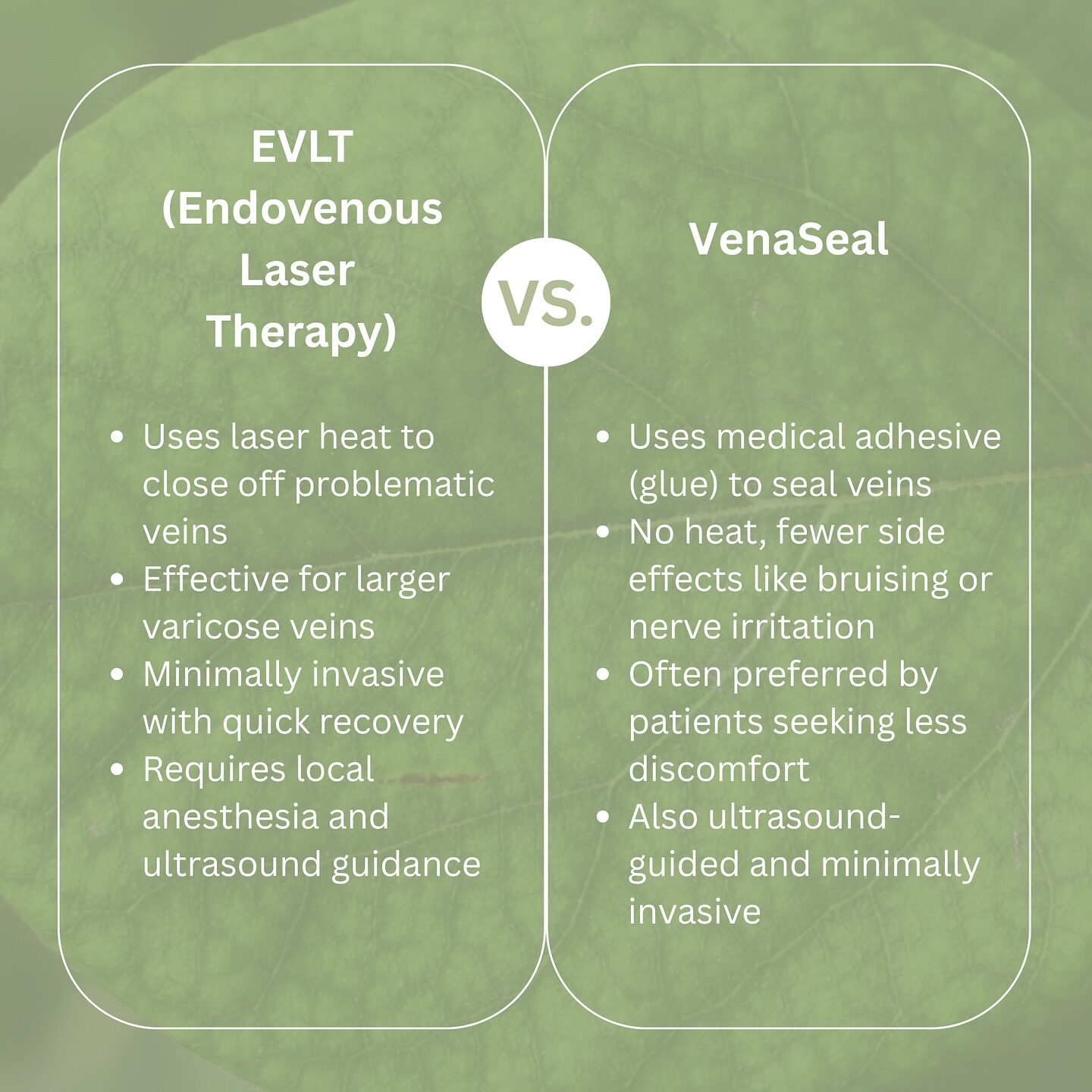
EVLT (Endovenous Laser Treatment)
EVLT uses targeted laser energy delivered through a small fiber inserted into the vein. The laser heats the vein wall, causing it to collapse and seal shut. Blood is naturally redirected to nearby healthy veins. This approach has been widely performed and studied. A large Ontario Ministry of Health review reported vein closure rates above 90% (93–99%) and noted that patients typically return to work much faster than with traditional surgery. Read the full study here.
VenaSeal
VenaSeal uses a medical adhesive delivered through a small catheter to close the vein. The adhesive safely seals the vein from the inside, allowing the body to gradually reroute blood flow and absorb the treated vessel. The procedure is performed in an outpatient setting and is designed to minimize disruption to daily life.
Both treatments are modern alternatives to older surgical methods such as vein stripping, which required larger incisions and longer recovery times.
Who Is a Candidate for Each Treatment?
EVLT may be recommended when:
- Larger or more complex veins are present
- Laser closure provides the most reliable seal
- Compression therapy is appropriate post-procedure
VenaSeal may be recommended when:
- Patients want to avoid post-treatment compression stockings
- A gentle adhesive closure approach is preferred
- Vein anatomy is suitable for adhesive treatment
However, vein anatomy varies widely from person to person. Even two patients with similar symptoms may require completely different treatment plans. That’s why a diagnostic ultrasound is essential before recommending treatment.
Realistic Timelines for Symptom Relief
Many patients seek treatment because of symptoms such as leg heaviness, aching or throbbing, swelling, night cramps or visible bulging veins. Both EVLT and VenaSeal work by closing the affected vein so blood can naturally reroute through healthier veins, which often leads to gradual symptom improvement. Read more about why varicose veins develop & when to treat (not wait). A typical timeline is as follows:
Immediately after treatment
- Walking is encouraged
- Mild tightness or tenderness may occur
Within the first few weeks
- Bruising and tenderness typically resolve
- Some symptoms such as heaviness and leg fatigue begin to improve
- Blood flow has fully rerouted to healthier veins
Within a few months
- Additional symptoms that require longer healing, like swelling will show improvement
- Cosmetic improvement becomes more visible
Because every patient’s circulation and vein health are different, the speed and extent of improvement can vary.

Why a Diagnostic Ultrasound & Consultation Matter
Many patients are surprised to learn that the visible veins are often not the main issue. In many cases, the underlying problem is deeper in the leg, which cannot be seen on the surface and must be identified through diagnostic ultrasound imaging.
At Lakeshore Vein & Aesthetics Clinic, your consultation includes a detailed ultrasound evaluation so our medical team can:
- Identify the source of vein symptoms
- Determine which veins require treatment
- Review treatment options such as EVLT or VenaSeal
- Discuss realistic treatment timelines and outcomes
- Create a personalized vein treatment plan
Because every patient’s vein health, symptoms, and lifestyle are different, a consultation with ultrasound imaging is the only way to determine which treatment is most appropriate for you.
If you’re experiencing symptoms such as heaviness, swelling, or visible varicose veins, the first step is a personalized vein assessment. To book your consultation, please call the clinic and find a time that works for your schedule.